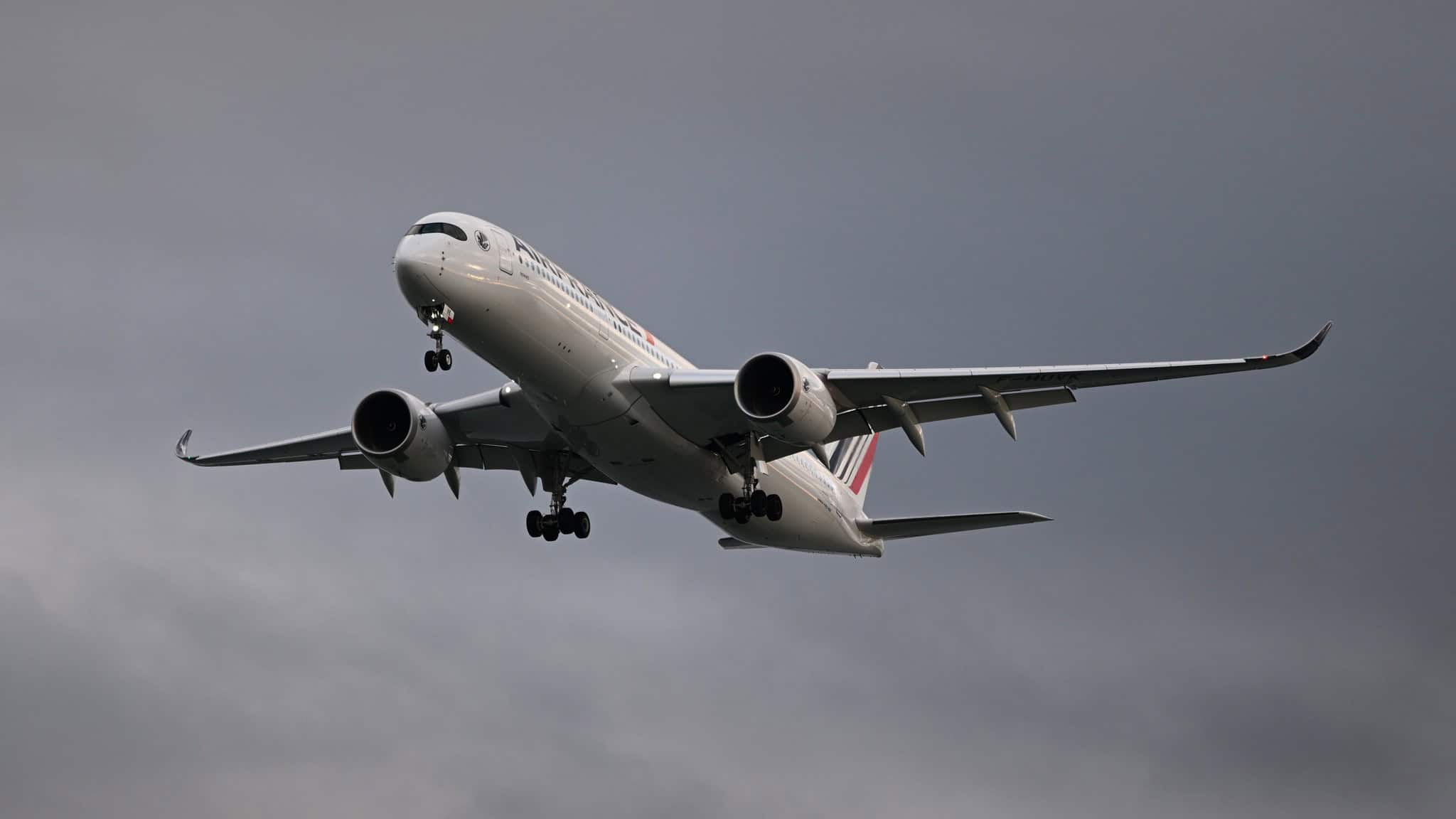
An Air France Airbus A350-900 turned left just after takeoff from Los Angeles International Airport. The turn put it on a path toward an American Airlines jet. The American jet had just taken off from a parallel runway. The controller acted immediately. He told the Air France aircraft to turn away and kept the American flight at a lower altitude.
The incident happened at about 12:15 a.m. on Saturday, November 7, 2026. Air France flight AF28 was an Airbus A350-900, registered F-HUVK. It took off from runway 24L and was flying to Papeete, Tahiti. American Airlines flight AA1660 was an Airbus A321, registered N191UW. It took off from the parallel runway 25R and was flying to Dallas–Fort Worth.
What the recording shows
Air traffic control audio and a flight-tracking replay show what happened. The American crew called the controller at 2,000 feet. They said they were climbing to 5,000 feet. Then the controller told Air France 28 to fly heading 270 immediately. This is a turn to the west. The controller also warned the American crew: "Traffic twelve o'clock. Less than a mile. Maintain two thousand."
Later, the controller told the Air France crew that they had to climb via their assigned departure procedure. They did not have to turn onto a heading. The controller asked why the aircraft had turned. The crew asked for a minute. Then they confirmed that they had the SUMMR TWO departure.
When the aircraft were separated, the controller told the Air France crew about a possible pilot deviation. He gave them a phone number to call. American 1660 then received clearance to climb to 17,000 feet. AF28 continued west toward French Polynesia.
How close they came
"Less than a mile" is the only separation figure on the recorded frequency. Another flight-tracking post showed a vertical separation of about 400 feet. However, nobody knows if either crew received a collision-avoidance resolution advisory.
At the time of reporting, Air France and the FAA had not made a public comment. The reason for the Air France turn is still unknown. There are some possible explanations. The crew may have loaded a wrong route into the flight computer. They may have selected a heading by hand. Or there may have been a misunderstanding in the cockpit.
Why the turn mattered
Los Angeles International Airport has two pairs of parallel runways. The 24s are on the north side and the 25s are on the south side. The terminals are between them. Runways 24L and 25R are the inner runways. Aircraft that depart to the west climb out close to each other.
The SUMMR TWO departure procedure is for aircraft that leave runway 24L. First, they fly heading 251 degrees. Then they go toward the navigation points DLREY and ENNEY. Aircraft that leave runway 25R use a different route. They go toward DOCKR and EVOSE. The two departure paths go side by side over the Pacific.
So an early left turn from runway 24L can take an aircraft across the path of a jet from 25R. The controller told Air France to turn west immediately. He also stopped the American climb at 2,000 feet. This was to keep the aircraft separated while they moved apart.
Not the first similar incident
The Air France event came after similar incidents with departures from runway 24L.
On October 20, TAP flight TP248 flew toward the wrong first navigation point after takeoff. Then it turned right when the controller told it to turn left.
On October 31, 2025, ITA Airways flight AZ621 took off from runway 24L. It was an Airbus A330-900 flying to Rome. It turned left toward American Airlines flight AA4. AA4 was an A321 that took off from runway 25R and was flying to New York. Flight-tracking data in reports on that incident showed the aircraft at the same altitude, 0.6 nautical miles apart. The controller held the American aircraft at 1,500 feet. He turned the ITA jet to heading 270. He also gave a possible pilot deviation notice.
What a deviation notice means
A possible pilot deviation notice does not mean the pilot is at fault. Under FAA air traffic procedures, the controller gives the crew a number to call. The controller also documents the event. Then the FAA flight standards office reviews the information.
All three incidents involved foreign airlines on long-haul flights from the same runway. Is this pattern a systemic problem, or is it a coincidence? The FAA's own data and investigation must answer this question.