The incident
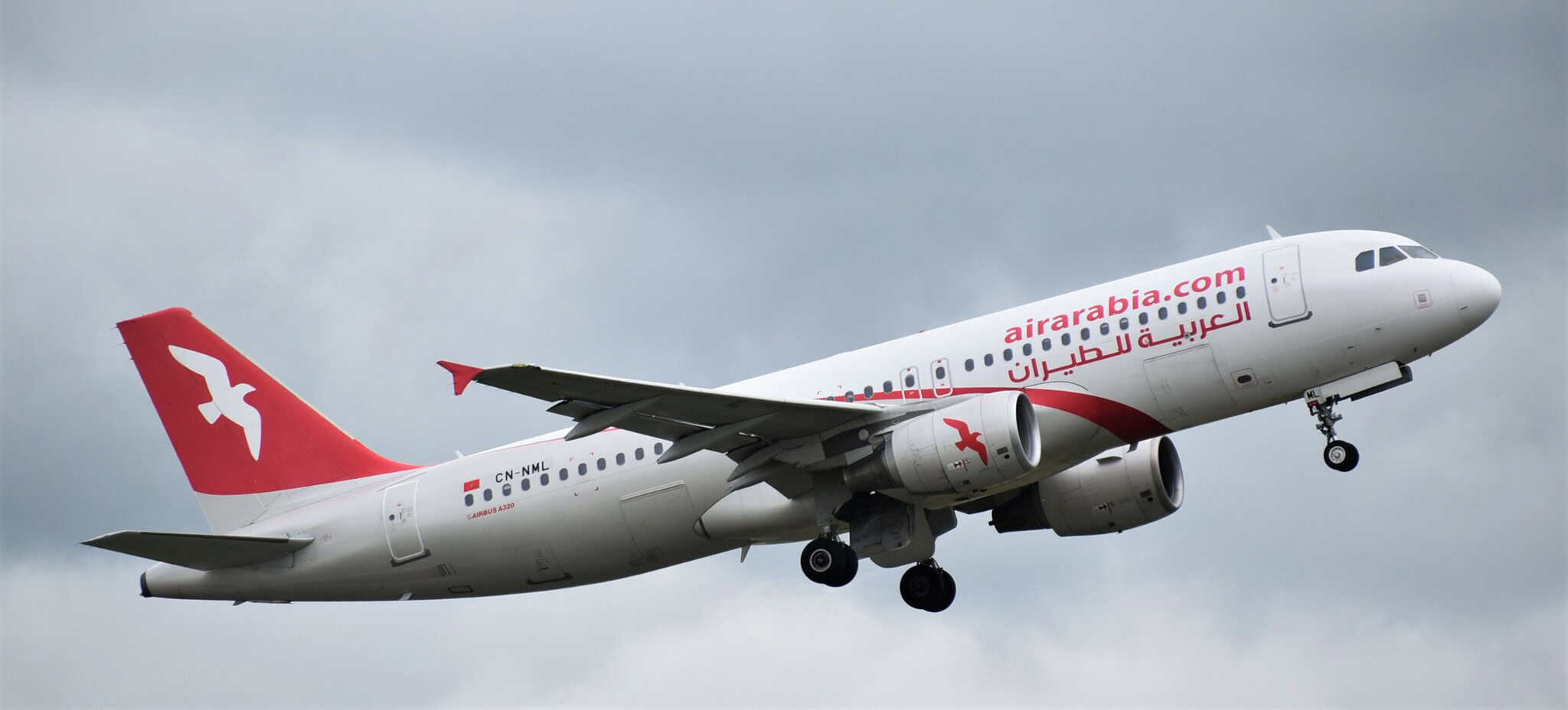
On September 20, 2025, an Air Arabia Maroc Airbus A320, CN-NML, took off from Catania, Sicily. A few seconds later, it descended to 41 feet above the sea.
Italy's air safety investigator, the ANSV, published its final report on November 6, 2026. The report says that the takeoff speeds were most likely never entered, and that a somatogravic illusion may have misled the captain.
It was a positioning flight to Amman, Jordan, with two pilots and four cabin crew on board, and no passengers. Nobody was hurt, and the aircraft had no damage.
A rushed departure
The aircraft arrived late at Catania. It landed at 20:51 UTC, and the runway was going to close for the night at 22:00 UTC. During the turnaround, the captain spent a lot of time on calls with the operator's dispatch office. He needed to fix the flight plan: it listed Palermo as the alternate for a flight to Amman. The tower asked the crew to expedite two times.
Both pilots say that they calculated the takeoff speeds and entered them into the flight management system. These entries are not recorded, so the ANSV cannot check them. The flight data matches an aircraft with no V-speeds loaded, and there is no sign of a system fault. The ANSV concluded that the speeds were probably never inserted.
The takeoff, step by step
At about 60 knots, the crew noticed that the flight mode indications were missing. Without a V2, the A320 does not engage SRS, its normal takeoff pitch guidance.
This was well below V1 (131 knots). The captain decided to continue at full takeoff thrust and not to reject the takeoff.
The aircraft lifted off at 157 knots. The highest pitch was 11 degrees. Airbus procedures ask for 15 degrees.
From about 309 feet, the recorder shows nose-down inputs on the captain's sidestick.
At 383 feet, the aircraft started to descend.
The captain engaged the autopilot for three seconds. The aircraft was already descending, so the autopilot held a descent of 1,900 feet per minute.
"Sink Rate" and "Pull Up" alerts sounded.
At 162 feet, the captain applied takeoff thrust and full nose-up input.
The lowest point was 41 feet (12.5 m) radio altitude, about 30 seconds after liftoff.
Then the A320 climbed away and landed normally in Amman.
The ANSV learned about the event only on October 1, 2025. Before that, the cockpit voice recording was overwritten.
The illusion
A somatogravic illusion is a type of spatial disorientation. Strong forward acceleration feels like a nose-up pitch. If there is no horizon, a pilot may push the nose down to stop a climb that is not real.
CN-NML took off at night, with the sea ahead. The moon was below the horizon. There were no passengers on board, and the aircraft accelerated harder than on its previous takeoff. The investigators estimate that the captain may have felt a pitch of more than 20 degrees even when the aircraft was really descending.
Neither pilot told the ANSV that they felt disoriented. The report says that this effect can be very hard to notice.
What the ANSV found
The report says that the cause was a temporary loss of situational awareness. It lists seven likely contributing factors:
an incorrect flight plan from dispatch;
time pressure, because the airport was closing;
V-speeds that were not entered or cross-checked;
FMS software with no alert for missing speeds;
the captain's decision to continue;
a lack of assertiveness from the first officer;
the somatogravic illusion.
The software
CN-NML had FMS2 Release 1A software. The newer Release 2 shows a "TO SPEEDS NOT INSERTED" caution on the ECAM. The report says that 45.3% of all A320s still have Release 1A.
The ANSV makes one safety recommendation. It asks EASA to consider making Release 2 standard for the whole A320 family fleet. Air Arabia Maroc is now upgrading its own A320s faster.
The report also says that the airline decided to end the flight crew's employment contracts. The airline says that the crew was extremely careless in their work.