The final report
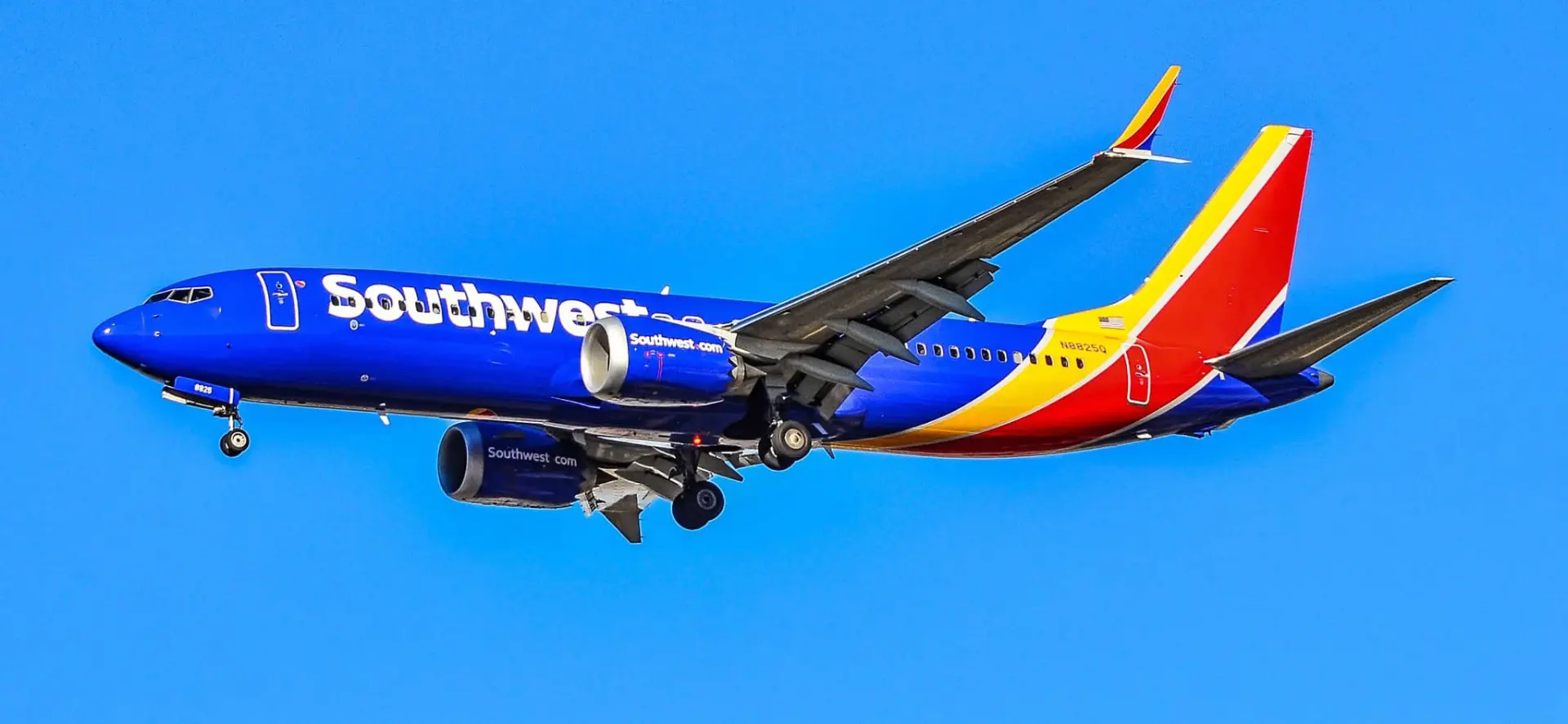
The National Transportation Safety Board (NTSB) has closed its investigation into Southwest Airlines flight WN746. In May 2024, this Boeing 737 MAX 8 went into a Dutch roll between Phoenix and Oakland.
The final report came out on November 5, 2026. The NTSB says that the rudder problem started nine days before the flight. The aircraft was parked in a thunderstorm, and the wind damaged it.
The flight
On May 25, 2024, flight 746 left Phoenix for Oakland with 175 passengers and 6 crew. Soon after the aircraft reached cruise at 34,000 feet, the captain felt "a small amount of Dutch roll". The first officer says that the tail moved back and forth. Both pilots felt the rudder pedals move.
The autopilot stayed engaged, and no warning lights came on. After a descent to 32,000 feet, the oscillations started again. The aircraft landed normally in Oakland, and nobody was hurt.
The damage
Mechanics found the damage inside the tail. The vertical stabilizer's trailing edge ribs above and below the standby rudder power control unit (PCU) were damaged. The PCU's forward support bracket was damaged too. One rib had fractured, and there were signs of overload.
The 737's rudder has no gust lock. The main rudder PCU damps gusts, but the standby PCU does not do this. The investigators concluded that the wind probably moved the rudder hard enough to damage the ribs that hold the standby unit.
From the storm to flight 746
May 16, 2024. The aircraft is parked overnight at New Orleans. A squall line passes through, and gusts reach 73 knots. Nobody tells maintenance control.
May 17–23. The aircraft makes 38 flights. Nobody reports problems with the rudder or the yaw damper.
May 23. A scheduled check in Houston. The standby hydraulic test is signed off as passed.
May 24. The crew disconnects the yaw damper. They say that it is overcorrecting. The yaw damper is deferred, then cleared after a functional test.
May 25. Flight 746, the 44th flight after the storm.
Two missed chances
At that time, Boeing's manual had no wind speed for a high wind inspection. Southwest had no process to tell maintenance control about a parked aircraft in such a storm. So nobody ever did the check that could find the damage.
There was a second chance on May 23. In the standby hydraulic test, a mechanic must watch the rudder move to each stop. Hangar security video shows that the rudder moved right, but not left. The report says that nobody was at the tail to watch. But Southwest maintenance signed the test off as passed.
The probable cause
The NTSB says that the probable cause was damage to the connection between the standby rudder PCU and the vertical fin. An extreme high wind event caused this damage while the aircraft was parked. Nobody found the damage, and because of it, the standby rudder PCU did not work normally.
Three things helped the damage stay unnoticed:
Southwest mechanics did not do the standby hydraulic test correctly;
Boeing's manual had no wind speed threshold;
Southwest did not have a good enough process to report parked aircraft in extreme wind.
The NTSB does not name a design defect in the rudder system as a cause.
Why the crew blamed the yaw damper
The 737 naturally tends to go into a Dutch roll. The yaw damper works against this with small automatic rudder inputs. Flight data shows that all the oscillations happened with the yaw damper engaged. After the Houston check, yaw damper commands also matched rudder pedal movement. This did not happen before the check. Normal yaw damper inputs do not move the pedals.
That is why the crew on May 24 blamed the yaw damper. But the real fault was the damaged mounting of the standby rudder PCU.
What has changed
The report says that Southwest inspected the rudder PCU mountings on all its 737 MAX aircraft and found nothing wrong.
The standby hydraulic test now has a step-by-step work card, and each assigned mechanic signs it.
Southwest now tells maintenance control when parked aircraft go through an extreme wind event.
In Boeing's 737 manual, the high wind inspection now starts at 65 knots (75 mph). The gusts at New Orleans, 73 knots, were above this.