Abbreviations
AAIB — Air Accidents Investigation Branch
ATC — Air Traffic Control
FDR — Flight Data Recorder
FL230 — Flight Level 230
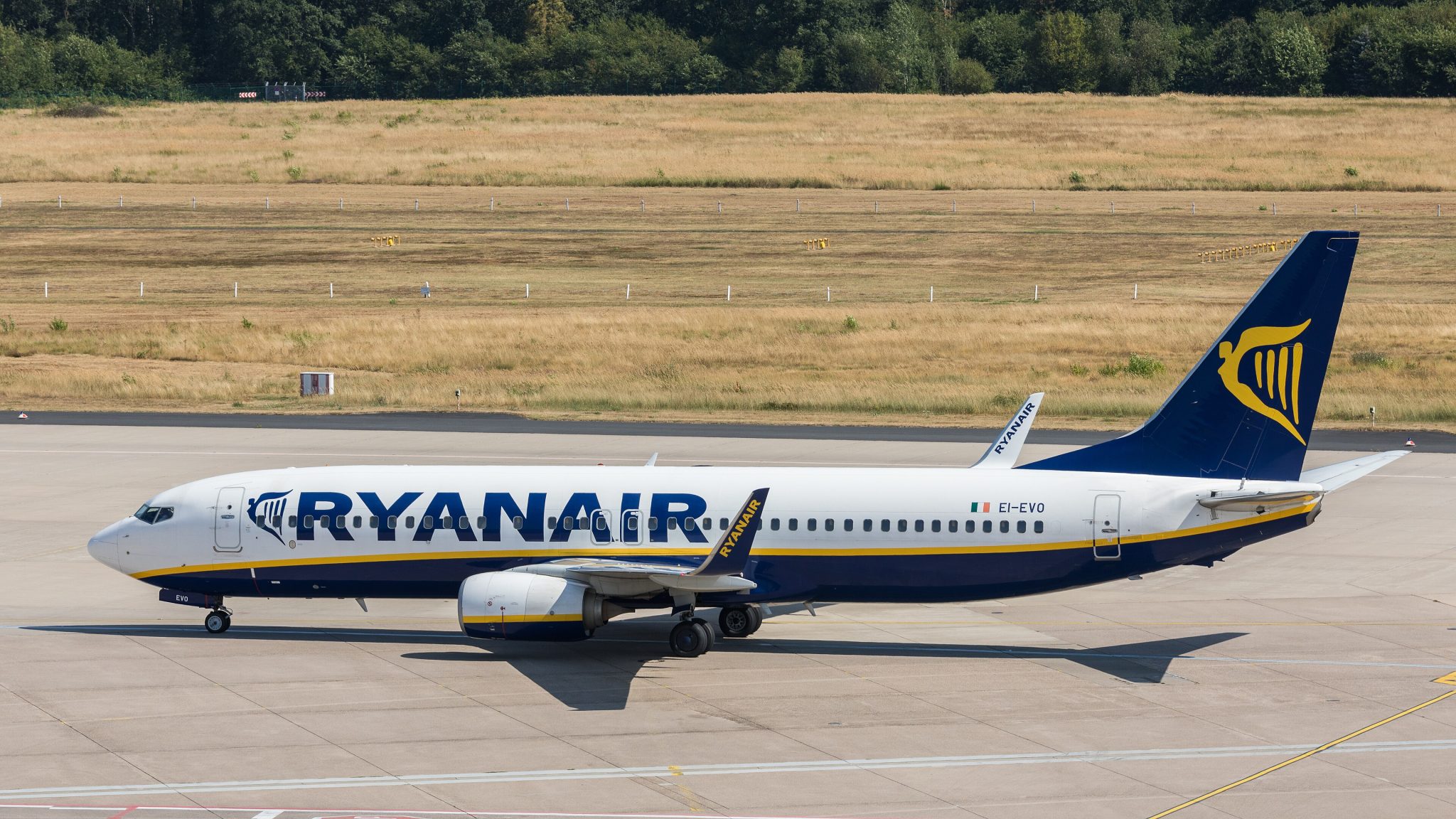
A Ryanair Boeing 737-800 landed at Manchester with only 363 kg of fuel left. The captain declared a fuel Mayday—an emergency call because of low fuel.
The flight was from Pisa to Glasgow Prestwick on 3 October 2025. There were 171 passengers and six crew members on board. Storm Amy was affecting Scotland.
The crew planned carefully. They checked the weather and chose Manchester as their alternate aerodrome—another airport where they could land if necessary. The captain added 1,322 kg of extra fuel. The aircraft departed Pisa with 11,500 kg of fuel.
However, the crew could not take more fuel because of landing-mass limits at Prestwick. This meant there was a limit on how heavy the aircraft could be when it landed. Runway 30 was not available because of the crosswind. The crew had to plan to use the shorter Runway 20.
During the first approach to Prestwick, there was a windshear warning at about 264 ft. The captain performed a windshear escape manoeuvre and went around.
The crew waited near Turnberry. Another Ryanair 737 landed at Prestwick, but its crew reported a 25 kt loss of airspeed on short final. The crew of 9H-QBD then made a second approach.
Before this approach, they told ATC:
“In the event of another go-around, we will proceed directly to Manchester.”
This meant: if they had to go around again, they would fly straight to Manchester.
During the second approach, another windshear warning activated at 50 ft. The crew went around again.
Company procedures did not allow a third approach after two windshear go-arounds. The crew needed to divert—fly to another airport. Their plan was to go to Manchester.
But ATC then said that Manchester could not accept the aircraft. Later, the AAIB found that this decision was wrong. Manchester had space for diversion flights and had already accepted 19 diversions that day. The problem was poor communication at the airport.
The crew requested Edinburgh instead. They discussed declaring a fuel Mayday, but they did not do it at this time. They believed that they had enough fuel to reach Edinburgh.
At Edinburgh, there was strong wind. At 745 ft, the third windshear warning activated. The crew performed another windshear escape manoeuvre. They had 2,164 kg of fuel left.
Now the crew had a serious problem. Another approach at Edinburgh could use too much fuel. If they went around again, they might not have enough fuel to divert safely.
The crew decided to return to Manchester. They needed about 2,800 kg to reach Manchester and still have their final reserve fuel left. This reserve was fuel for about 30 minutes of flight for unexpected situations. But they had only about 2,100 kg.
At 19:12 UTC, the captain declared:
“Mayday, Mayday, Mayday, fuel.”
The aircraft climbed to FL230 and flew south to Manchester. Both main tanks showed low-fuel warnings. The crew knew why the warnings appeared, so they did not use the Low Fuel Quantity checklist.
The aircraft landed on Runway 23R at Manchester at 19:52 UTC with 363 kg of fuel. After engine shutdown, the FDR showed only 240 kg.
Another go-around at Manchester was probably not possible.
All 177 people on board landed safely.
The AAIB said that Manchester’s first refusal was the main system failure. According to the AAIB, accepting the aircraft earlier would probably have allowed it to land with a normal fuel reserve.