Abbreviations
AAIB — Air Accidents Investigation Branch
ATC — Air Traffic Control
EGPWS — Enhanced Ground Proximity Warning System
FDR — Flight Data Recorder
FCOM — Flight Crew Operations Manual
FMC — Flight Management Computer
FL230 — Flight Level 230
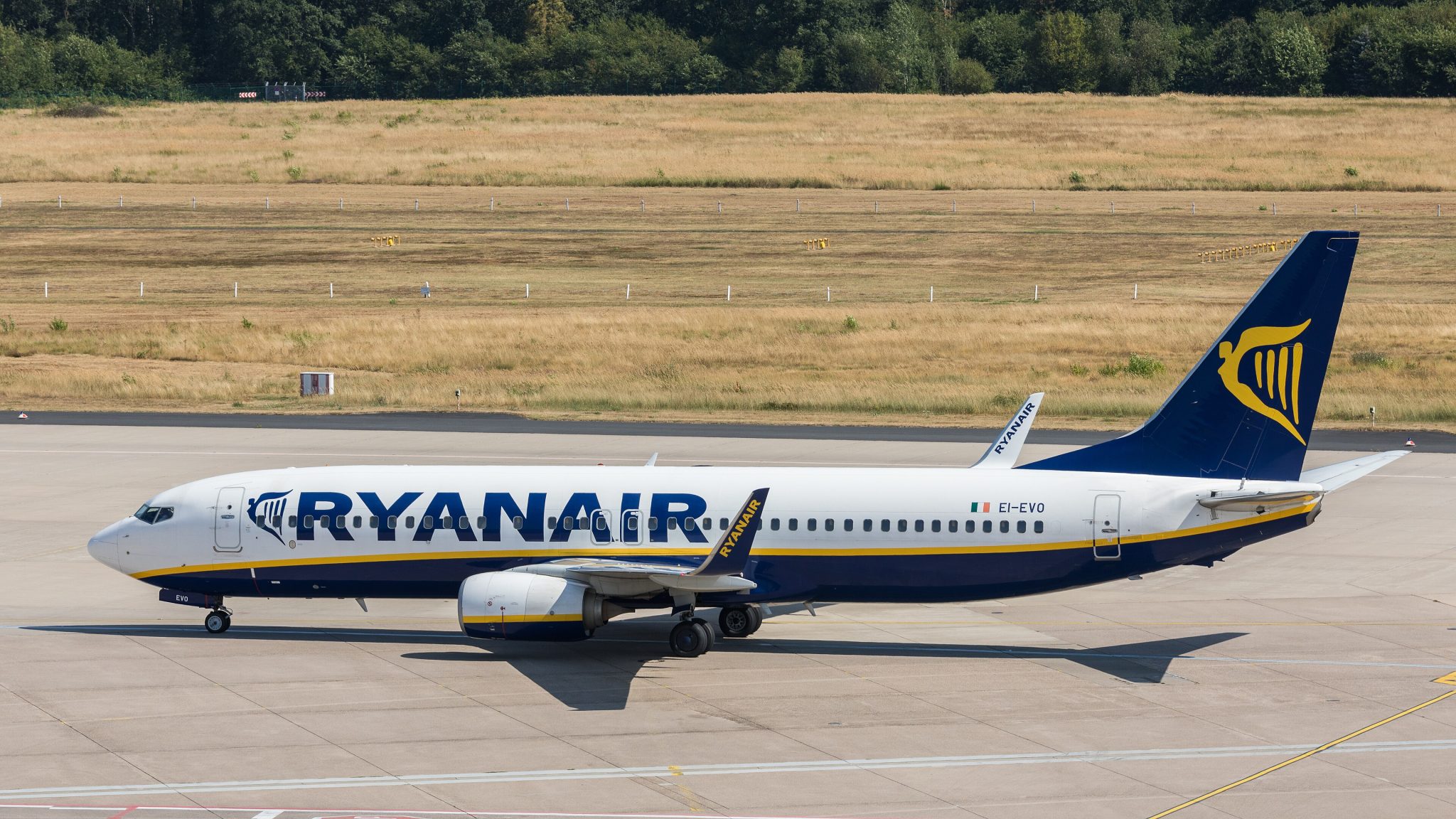
A Ryanair Boeing 737-800 landed at Manchester Airport with only 363 kg of fuel remaining. Before landing, the crew had received three windshear warnings, made two go-arounds at Prestwick, and declared a fuel Mayday.
The aircraft, registered 9H-QBD, was flying from Pisa to Glasgow Prestwick on 3 October 2025. There were 171 passengers and six crew members on board. Storm Amy was affecting Scotland that evening.
The UK AAIB investigated the serious incident. It found that Manchester Airport’s initial refusal to accept the aircraft was an important factor in the event.
The crew had prepared carefully for the storm. The operator had issued safety information before the flight and recommended conservative fuel planning. Both pilots calculated the fuel independently and compared their results in Pisa.
They chose Manchester as the alternate aerodrome because they expected better wind conditions there than at Glasgow. The captain also added 1,322 kg of discretionary fuel—extra fuel carried by the captain’s decision. This was equal to about 1 hour and 12 minutes of extra flight time. The total fuel uplift was 11,500 kg.
However, the crew could not take even more fuel. Because of a crosswind at Prestwick, the longer Runway 30 could not be used. The flight had to plan for the shorter Runway 20. This reduced the allowable landing mass and limited the amount of extra fuel.
The aircraft departed Pisa more than one hour late, at 15:28 UTC.
During the first approach to Prestwick, the surface wind was 240° at 29 kt, gusting to 45 kt. At about 264 ft, the EGPWS gave a windshear warning. The captain performed a windshear escape manoeuvre and went around.
The aircraft then held near Turnberry. The crew monitored another Ryanair Boeing 737 on approach to Prestwick. That crew reported a 25 kt airspeed loss at 500 ft on short final, but landed safely. The crew of 9H-QBD decided to make a second approach.
Before the second attempt, they told ATC:
“In the event of another go-around, we will proceed directly to Manchester.”
During the second approach, another windshear warning activated at only 50 ft. The crew went around again.
The operator’s procedures did not allow a third approach after two go-arounds caused by windshear. The crew therefore had to divert to Manchester.
However, ATC then informed them that Manchester could not accept the aircraft. No reason was given at that moment.
Later, the AAIB found that this refusal should not have happened. Manchester Airport had ground capacity for diversion flights and had already accepted 19 diversions because of Storm Amy. The airport’s policy said that Airfield Operations should decide whether to accept a diversion. The handling agent should not make this decision.
The conversation was not recorded, so investigators could not establish the exact reason for the refusal. However, they identified poor communication inside Manchester Airport.
Manchester was unavailable, and Glasgow was also reporting windshear on final approach. The crew therefore requested Edinburgh. This took another five minutes to arrange.
The pilots discussed declaring Mayday. A fuel Mayday would have required Manchester to accept the aircraft. However, the crew believed that their fuel situation was not yet an emergency under the criteria in the FCOM and Operations Manual.
At Edinburgh, the wind was 240° at 34 kt, gusting to 46 kt. At 745 ft, the third windshear warning of the evening activated. The crew performed another windshear escape manoeuvre. They had 2,164 kg of fuel remaining.
The crew now had a difficult decision. They could make another approach at Edinburgh and land with their final reserve fuel intact—but only if the approach was successful. Another go-around would leave too little fuel to divert safely to another aerodrome.
With about 2,100 kg remaining, the crew decided to return to Manchester. They needed about 2,800 kg to reach Manchester and still have their final reserve fuel at landing. Their first estimate was that they would land with 500–700 kg. When they entered the route into the FMC, it predicted only 300 kg at landing.
At 19:12 UTC, the captain declared:
“Mayday, Mayday, Mayday, fuel.”
The aircraft climbed to FL230 and flew south to Manchester. During the flight, both main tanks showed low-fuel indications. The crew corrected a 100 kg fuel imbalance. They did not use the Low Fuel Quantity checklist because they knew why the warnings had appeared.
The AAIB also noted that the crew did not consider Newcastle. It was closer than Manchester and had a reported wind of 22 kt. Edinburgh, now behind the aircraft, was also closer. The investigation suggested that the crew’s earlier plan to use Manchester may have influenced their later decision. They may not have fully considered the other available airports.
The aircraft landed on Runway 23R at Manchester at 19:52 UTC with 363 kg of fuel remaining. After engine shutdown at the stand, the FDR recorded only 240 kg.
The final reserve fuel for the flight was 1,101 kg, equal to about 30 minutes of flight. At go-around thrust, the engines used approximately 120 kg per minute. Another go-around at Manchester would probably not have been possible.
All 177 people on board landed safely.
The AAIB accepted that the captain considered Manchester the safest available option. It also confirmed that all three windshear warnings were valid and that the EGPWS worked correctly.
The main system failure was on the ground. The AAIB concluded that accepting the first diversion request would probably have allowed the aircraft to land with a normal fuel reserve. After the event, Manchester Airport repeated that only Airfield Control can decide whether to accept diversion flights.